Virudhunagar district, located in Tamil Nadu, has a diverse geological framework primarily composed of hard rock formations from the Archean to Proterozoic age. The region is part of the Southern Granulite Terrain (SGT) of the Indian shield, which is characterized by high-grade metamorphic rocks and igneous intrusions.
Company Statistics Analysis
Great Achievement For Insurance
8563
+
Saticfied Custimer
2630
+
Experience Members
100
%
Satisfaction Rate
25
+
Years Experience
963
+
Awards Winning
Popular Clients
We’ve 1520+
Global Premium
Clients
Migmatites
Charnockite
Granite
Charnockite and calcareous veins
Gneisses
Geological Formations:
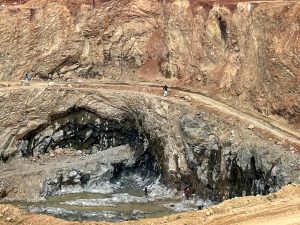
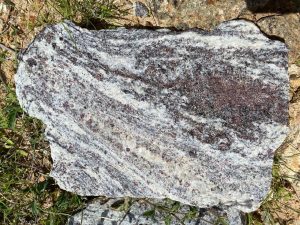
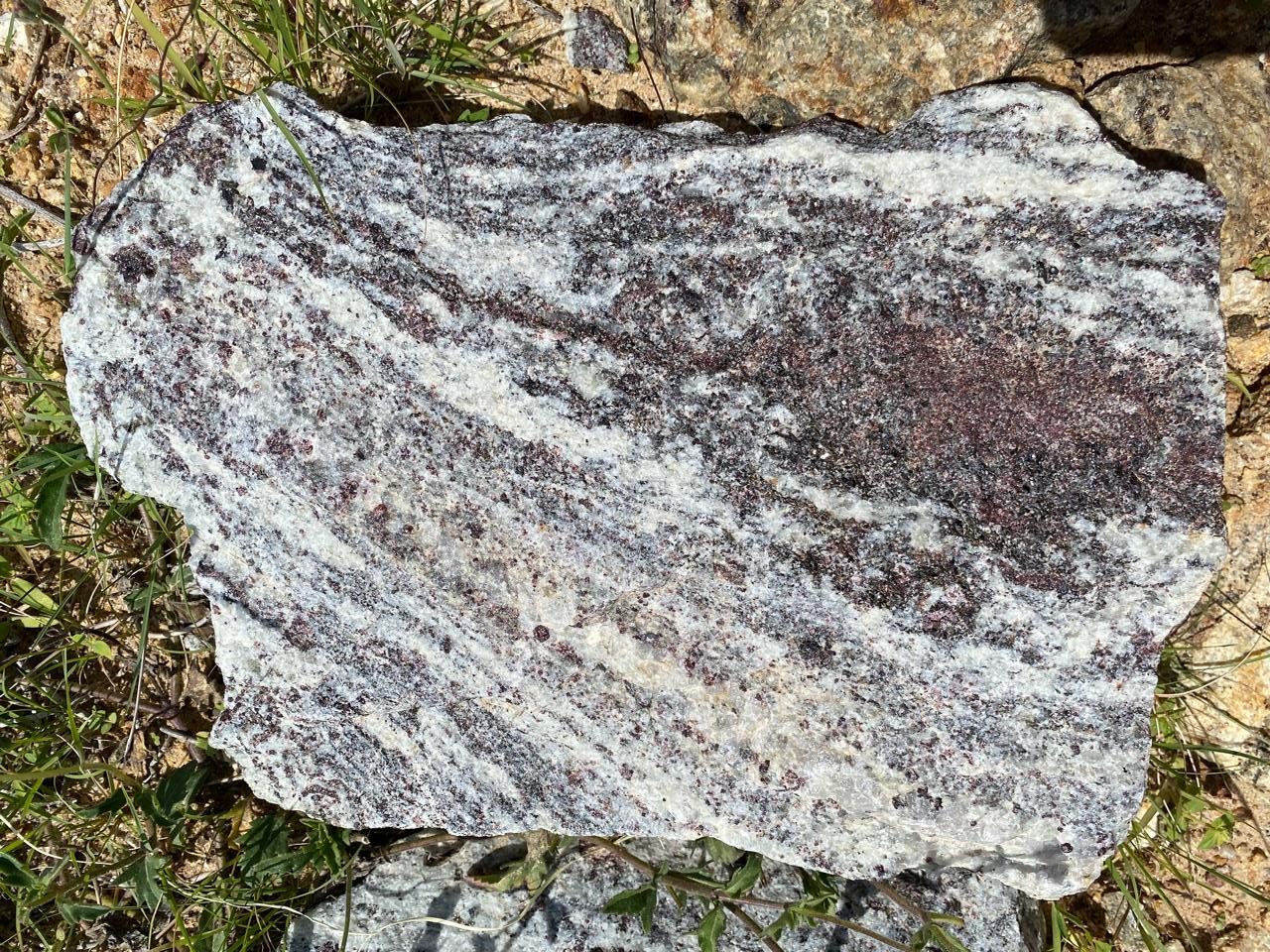
Gneissic Complex The district is dominated by charnockite, hornblende-biotite gneiss, and granite gneiss, which are typical of high-grade metamorphism. These rocks provide stable foundations and serve as sources for construction materials.
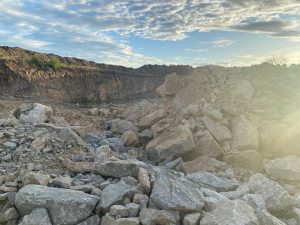
Charnockite A significant portion of the terrain is covered by charnockite, a hard, dark-colored metamorphic rock that is widely quarried for use as dimensional stone and road metal.
Granite and Pegmatite Intrusions Several granitic and pegmatitic intrusions occur in the region, often associated with feldspar and quartz mining. These intrusions play a role in groundwater storage and mineralization.
Migmatites and Quartzites Found in certain pockets, these rocks indicate partial melting and metamorphic reworking. Quartzites serve as a durable construction material.
Alluvial DepositsAlong river courses, such as the Vaippar and Gundar rivers, recent alluvial deposits consisting of sand, silt, and clay are found, supporting agriculture.
Economic Geology:
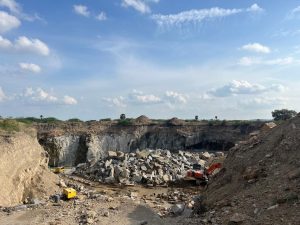
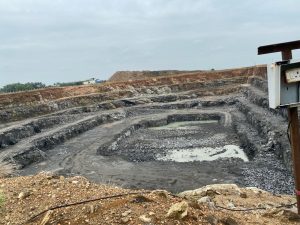
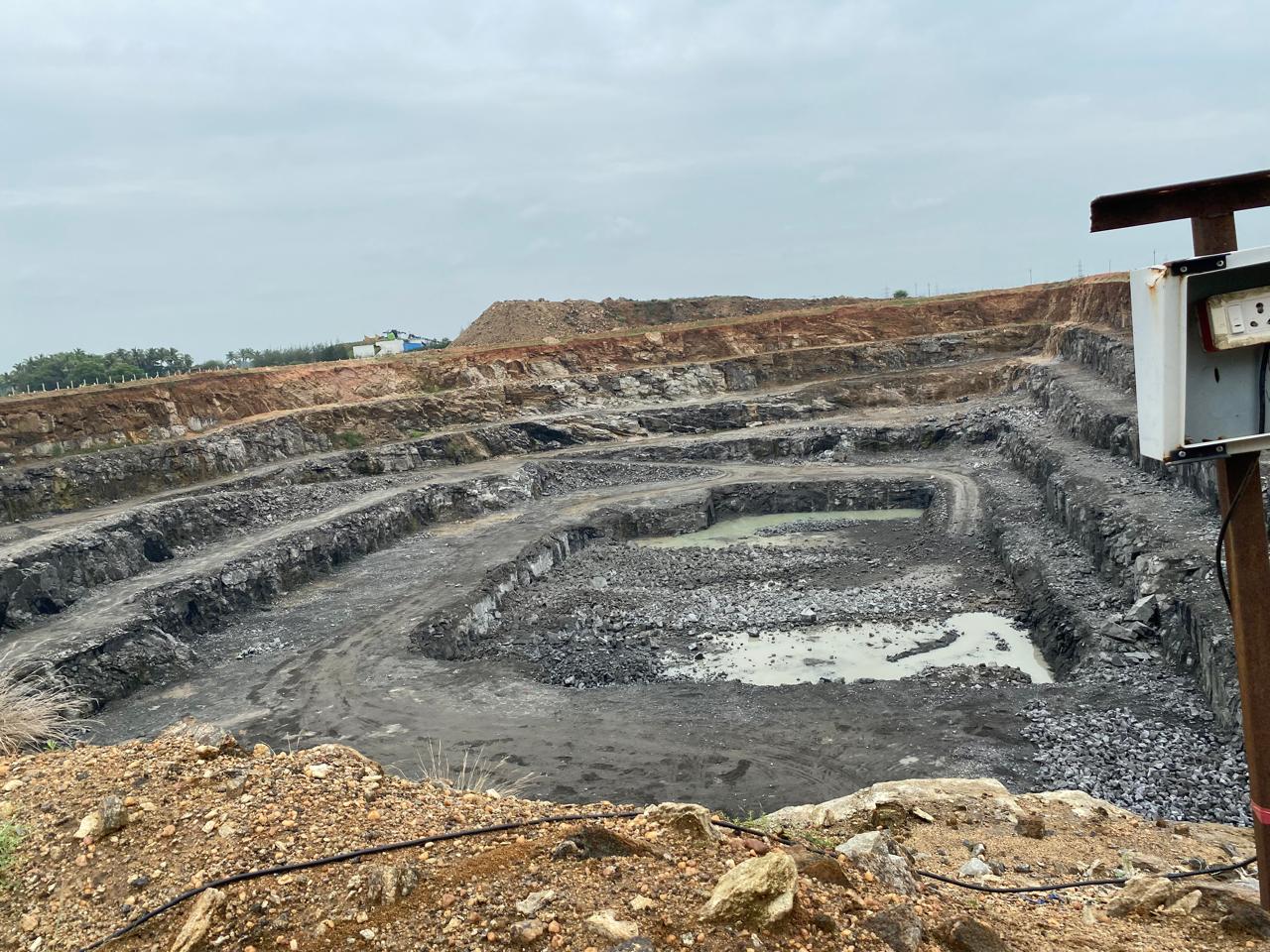
Granite quarrying Virudhunagar is known for its high-quality granite, used for construction and monuments.
Feldspar and Quartz Mining These minerals are extracted for industrial applications like glass and ceramics.
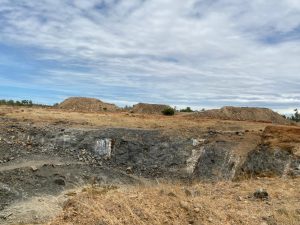
Lime deposits Minor occurrences of limestone and calcareous material are present, which are used for agricultural and industrial purposes.
Granite
Limestone quarry
Groundwater and Hydrogeology:
The district primarily relies on fractured hard rock aquifers for groundwater
Groundwater availability is influenced by jointed and fractured zones in gneisses and charnockites.
Seasonal rivers and tanks contribute to groundwater recharge.
Overall, Virudhunagar district’s geology is marked by a mix of ancient high-grade metamorphic rocks and more recent alluvial deposits, making it important for both mineral resources and groundwater management.